Mammoth
The minute they got back from hospital, Ursula went to bed. Warren hovered while she undressed, stunned by the emaciated sight of her in her underwear. She collapsed straight into sleep, and to be useful, he pulled the duvet up to her ears. But being useful was a novelty and he was still in training. In the hospital, the nurses had talked over him and directly to his wife. He didn’t have the language to intervene, the language of caring, that is.
Ursula had gone in for a thyroid operation, contracted septicemia and been given an emergency blood transfusion. She woke from the catastrophe almost as though reborn. Warren had always thought of her as soft and yielding. Now she was anything but. When a senior registrar told the barely-conscious Ursula that it took older people longer to recover, she had growled back: “I’m not old, but ill.”
It was as though a flame had ignited inside her, and his own been extinguished at the same time.
No, they weren’t old. They were in their late fifties, working people, parents whose children were now away at university. They were so busy that sometimes they only met at night in bed, and then only briefly before the odd page was read and the lights turned out. In the mornings, he was always the first up and out.
Now, as Warren perched on the edge of the bed, new and tender thoughts came to him, though not the words that should have accompanied them. He was sure that he’d always loved her, but all he seemed to recall from the early days were arguments.
“I hate my name,” he’d complained when they first met. “Warren.”
“I hate mine, too,” she said. “Hideous mouthful.”
But he wasn’t having it. “It’s a fantastic name. Ursula – a she-bear. Yours is much better than mine. You’ve nothing to complain about.”
He was always putting her right, telling her what she should be thinking. But they were young, still unsure of who they were, and he was trying to improve her, that was all. Now, watching her taut face, her papery eyelids, that influence was slipping away.
“I’m sorry I’ve been so difficult, Sully,” he said, using the nickname she preferred. “I’m sorry I’ve always pushed and pushed.”
There was so much more to be sorry about. Things she couldn’t know, including a reckless moment with a work colleague when the children were very small, and he’d felt left out of their world. But that seemed like a lifetime ago and someone else’s lifetime at that. It made him sick to even think about it.
“I’ll get you some bananas, shall I? All round good food. And the telly. I’ll set it up at the foot of the bed. For when you wake up.”
Ursula stirred in her sleep, frowned, sighed.
“Those special teas you like.” (He always mocked her special teas.) “I’ll get more in for you. They said I had to keep you hydrated.”
Her hands were folded under her cheek. Did she always sleep like that?
“The radio! I’ll bring the one up from the kitchen. You love the radio.”
His hand was itching to make contact, but he couldn’t bear to disturb her.
“Sully,” he whispered. “What shall I do? You’re my job now. I’m on leave from work, so I can do anything. Anything, at all.”
And at that she woke – just briefly – and smiled at him.
“Mammoth,” she said.
*
Warren slept in the spare room, on the sofa bed, with only Ursula’s sewing machine for company. There it sat, on an old office desk, mysterious and defiant. He eyed it as he called the children and kept them abreast of their mother’s health.
Whenever he entered the bedroom, she was asleep. Was it right that she should sleep so much? He couldn’t find any reassurance on the internet and not knowing what was normal made him anxious. She used to tell him to take a deep breath and count to ten. Usually, it was because the children wouldn’t behave as he expected them to. Their systemic unpredictability didn’t seem to bother her, but it always wound him up. So sudden, that explosion of rage. They scattered at the onset of it, left him alone and simmering. It made him feel omnipotent and ashamed at the same time.
He placed her raspberry and dandelion tea on the bedside table and said: “Anything, I can do or bring, Sully? Just say.”
He thought she was asleep.
“Make me something,” she said.
He crouched down, placed his face close to hers, noticed her eyes were slightly open.
“What was that?”
But she would give him nothing more.
This was her one request? To make something! Ursula was the maker, not him. She was always planning projects and he was always rolling his eyes at them. She had graduated in fine art when they’d met. It wasn’t a proper degree as far as he was concerned, and he’d encouraged her to go into something more solid, so that – he said – she could hold her head up high and be someone. But it soon became evident that her working life was a stop gap and her home life – with its painting, drawing, sculpture, woodwork, knitting, sewing and, of course, the kids – was everything.
Faced with her enigmatic request, Warren’s only instinct was to turn to a machine. He went and sat at the desk in the spare room and inspected the sleek white animal before him. He pulled open the drawers and came across a stack of paper patterns. The top one was for a nightie, which seemed appropriate. In a basket by the side were folded lengths of fabric. He saw at once the pale blue material that Ursula had used a few summers back to make him a shirt for a wedding. That would do. A fabric they could share, that covered them both; he liked that idea. He even remembered what it was called: linen. When he touched it, laid his hand on its uneven grain, he saw at once, as though for the first time, the texture of his own skin.
For the next hour he watched internet tutorials on how to use a sewing machine – to thread it, to wind its bobbin and to set its stitch length – and on how to cut out the pattern pieces. He did the latter on the living room floor, just as she always did, the radio on, tea steaming beside her. The pieces cut, he gathered them together and took them up to the spare room and set about assembling them. When he looked up, it was two in the afternoon. Her lunch! How on earth could he have been so neglectful. He entered the bedroom with soup and buttered bread on a tray in one hand, a pristine, pale blue linen nightdress in the other.
“Sully, look at this. I made you a nightie. What do you think?”
It dropped down into its entirety as he held it up. She inspected it dreamily, her brows low with the attempt to focus.
“I’ll leave it here, shall I?” He placed the garment neatly in the gap where he usually slept. She hummed a yes. And so he left.
What Warren was feeling, he realised as he made his way back down to the kitchen, was exhilaration.
*
In the evening, he was encouraged to hear that she had switched the radio on. When he went in with her scrambled eggs, he saw that she was very slightly higher in the bed, had given herself an extra pillow, though her eyes were still closed and her breathing shallow.
As he rearranged the duvet, he was staggered to see that she was wearing the blue linen nightie. The urge to cry was overwhelming. It wasn’t his gift to her anymore but the other way around.
He was about to lean down and kiss her when she opened her eyes. “What can I do?” he asked, newly enthused. “Can I bring you anything?”
“I want to hear…” she began.
“The radio?” he asked. “Shall I turn it up? It’ll be the news soon.”
“Chickens,” she said.
And there was nothing more, only a modest, contented snore.
This time he understood instantly what she was driving at. It wasn’t the first time she’d expressed a desire for pet hens. Ursula had grown up on a small-holding in the West Country – among hippies, Warren said. From the moment they got together, she seemed convinced that they would also be acquiring animals. But Warren was unrelenting in his resistance. The kids begged – just a small dog, maybe – and Sully kept up a remarkably patient campaign, but it was always a no. And I mean no. Why, they demanded? Because humans were not meant to keep other lifeforms captive in their homes, and anyway, they stink and need walking and cleaning up after and cost a fortune to feed. No.
“But I miss the sound of chickens,” Ursula had said. “They gossip as they scratch through the soil. There’s no happier sound.”
Warren left the bedroom picturing himself holding a hen up to his delighted wife, before retreating with it to the waiting farmer, paying him off, and returning to find her revived. Where would he find a farmer, let alone hens? They couldn’t have been in a more urban setting and the nearest city farm was over the river.
He went instead, for inspiration, to the pet megastore, where he engaged with a young, tattooed man who described himself – to Warren’s contempt – as an expert in small furries.
“Chickens? No one wants them anymore. A few years ago they were all the rage. Everyone putting in orders. Now, it’s like the chicken thing never even happened.”
Warren didn’t understand. What chicken thing? “It’s for effect,” he said. “The sound they make. It’s very soothing. My wife thinks so anyway.”
“Listen,” said the tattooed man. “What can you hear?”
Warren obliged. General shop sounds – children, adults, tills ringing – and a low bubbling chatter which underscored everything else, and which was oddly relaxing.
“You want soothing?” said the young man. “Guinea pigs should be prescribed on the NHS.”
*
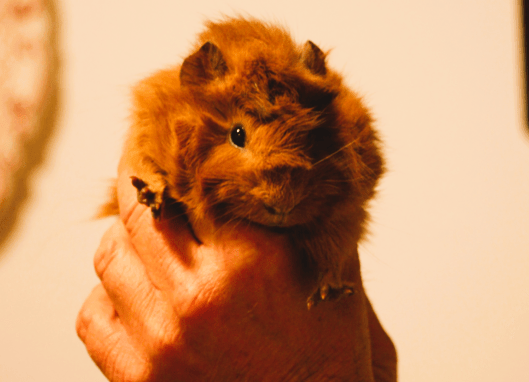
They lay in bed together, her head on his shoulder, and listened to the intermittent shuffling of feet among sawdust. Every now and again a whirr of peeps and whistles emerged from the pen under the window. Warren felt drowsy.
“They said I should invest in a fox-proof hutch, but I said no thank you, they’re going to live in the bedroom, in a run. They thought I was mad.”
As the afternoon turned into evening, his monologue mingled with the low hum of guinea pig conversation and occasional snuffles from his semi-conscious wife. In the morning, he would clean them out and put down fresh sawdust. They probably didn’t need it, but he looked forward to activity and – he realised – to handling these beguilingly round-bottomed rodents and looking them in the eye.
He slipped from the bed and Ursula turned on her side, placing her hands under her cheek, presaging the next bout of sleep. He didn’t want to leave them all – the bedroom now felt like the heart of the house – but it was time for him to go to the spare room. He bobbed down beside her, their faces level, and pushed stray hairs from in front of her eyes.
“I love you,” he said, and something in his throat hardened and wanted to choke him.
She smiled a half-asleep smile.
“Anything else?” he asked. “What should I do now?”
“Get rid of everything,” she said.
*
It was Carrie, their younger daughter, who enlightened him.
“She’s been going on about that for ages. She says she’s got too many things and won’t be happy until they’re gone.”
“What things?” he wanted to know. He felt so deflated.
“I don’t know. Old clothes, books she’ll never read again, all the clutter in the second bedroom, the kitchen stuff you never use, those tiny bits of wrapping paper. It’s been weighing her down.”
Had it? He was incredulous. He thought she loved her books.
“I’ll come over and help if you like.”
Carrie showed up the following morning and, having spent a little time with her mother, arrived in the kitchen to find her father staring helplessly at a mountain of cookery books.
“We’ll just keep one of those,” she said. “The one she always uses.” Warren watched his daughter pick out a large, tatty, oil-stained volume and put it aside. She shoved the rest into a plastic bag. By the time their elder daughter, Ria, arrived in the afternoon, Warren and Carrie were sorting through the airing cupboard.
“Wow, Dad. You’re on a roll. Mum’ll be thrilled.”
Ria had clashed a lot with her father of late and to win her approval was heartening.
The girls took the lead when it came to the old toy chest on the landing. As he sifted through the clothes in the spare room wardrobe, he could hear them laughing and reminiscing. Often, they called him over to look at a toy from their baby days and each time his heart melted at the sight of something he’d forgotten even existed: a wooden shape-sorter, a musical phone.
“Does your mum really want us to get rid of these?” he asked in despair. “Can you part with them?”
“Yes,” said Carrie. “They only had a meaning when we were little. Now, they’re artefacts, that’s all. We can’t play with them anymore.”
No, they couldn’t. And he had no intention of wearing his old sports gear again or his grey interview suit. But he was supposed to respect the past, wasn’t he? That was the impression he got when he listened to the others, that something special had been forged between them and that there was still time for him to catch up and understand.
Ria came in to watch him as he leafed through a box of bank statements dating from the previous decade.
“I can take it all to the charity shop on my way back tomorrow,” she offered.
“You’d do that?” When had his first-born become so accommodating?
She sat on the sewing table chair and helped him wade through a box of electrical wires. Kneeling by the bed, he unraveled them, while she secured them with cable ties.
“Let’s get a take-away tonight,” she suggested. “Carrie and me paying.”
“No, I can’t allow that. I’ll pay,” he insisted.
“Dad. Let us. Please.”
Which is when it hit him that everything had been changing and he hadn’t even cottoned on. He knelt back on his heels and felt dizzy. Who were all these people? Had he even had a role in creating and caring for them? Was this how they paid him back, by growing up and away? By maturing?
“What’s wrong?” she asked.
“I’m scared your mother’s going to change.”
Ria seemed taken aback. “Change how?”
“I don’t know. Just change. Towards me. I can feel it.”
Carrie was standing at the door, listening.
“Why shouldn’t she change?” she asked. “Everybody changes. Let her.”
“But…” and his voice trailed away. They waited but a thought had struck him and it stayed unuttered. Here he was, trying his best to understand his wife, but maybe for all these years she’d been struggling to understand him. He thought he was so simple, so direct and obvious. Maybe he wasn’t. Maybe to her he was obscure and difficult. Difficult! That’s not what he wanted to be.
Ria was the one to break through his thoughts: “There’s no circle, Dad. Just a line leading from beginning to end. Constant change. Don’t wait for the same things to happen again, for the same love to revisit. The love will be different. Now, do you think a nice mild korma with a bit of rice will do Mum good? I think so.”
They took their dinners into the bedroom and sat around the bed while Ursula, in her fresh linen nightgown, slowly consumed her fragrant meal. From the other side of the room came mutterings and scurryings. They chatted about this and that, the girls about their courses, Warren about the clean-up campaign in the rest of the house.
“Dad’s worried that we’re bull-dozing away the past,” said Carrie to her mother.
Ursula smiled and shrugged. “The past isn’t things,” she said, wearily.
Ria fetched a guinea pig and let it explore the bed.
“Mammoth,” said Ursula, her eyes on the animal and yet elsewhere.
“Wasn’t that your nickname for Dad?” asked Carrie.
“Because he was so big and primitive,” said Ria.
Warren glanced from face to face. What were they talking about? He didn’t have a nickname. He always wanted one – he hated his name so much – but nothing was ever forthcoming.
“Primitive?” he asked.
“Don’t look so horrified, Dad,” laughed Carrie. “I think it was affectionate.”
“Sully?” He looked to his wife for an explanation. She was shaking her head and controlling a tremor of amusement.
“Not primitive. I never said that, girls. Solid. Eternal. Indestructible. I’ve always loved mammoths.”
Was it too late? It was as though another life had been playing out beside his – another Warren, known as Mammoth, loving his family, looking after his girls, solid, eternal, indestructible. And yet all he thought he’d felt was conflict and strain. All the resentments and the moments of barely-concealed fury… had they loved him despite it? Seen through it? There is no circle, said his clever daughter, only a line from beginning to end.
He heard the girls debating whether a mammoth was eternal, given than the species had died out.
“But it hung on in there for a long time,” said Warrren. “That’s the point.” And he reached out instinctively to catch and save the guinea pig as it fell off the side of the bed.
A Lifetime Achievement
She runs her hand along the back of the gold-beige velour sofa and smiles fondly at it, as she might smile at an adult child who has never stopped being her baby.
“I bought it with my first big pay cheque as a casting director. It’s totemic. Is that the word?”
He thinks about it for a moment, his eyes on the deep layer of gold fringing running round the bottom of the three-seater settee.
“Why not?” he says.
“I won’t part with it.”
He seems to understand, is an empathetic kind of man, she divines.
Joyce Maslin has never allowed a journalist into her home before. They have often asked her for interviews, wanting to dig into her mound of memories, but she has never trusted anyone enough to let go of any closely-kept names and anecdotes. This young man, however, intrigued her with his discreet manner and humility. He wrote to her. Actually wrote to her on paper and in an envelope and included cuttings of his past, rather unremarkable articles on industry professionals, the directors of photography and sound engineers that – she knew – were only of interest to colleagues and not likely to reach the wider public’s eyes. And anyway, she was on the verge of retirement and on the eve of collecting her lifetime achievement award. Why not make a slightly eccentric choice when it came to breaking her silence? He was no threat – not a tittle-tattle kind of celebrity-baiting journalist, but a solid business reporter, a nerd, a worshipper of her world, not its scourge. It was about time she let another pair of eyes into her home, allowed someone to see how she lived, and to admire it.
And so she brought him straight to her second sitting room on his arrival this mellow June morning, so that he might glimpse the swimming pool through the French windows. Or the cover on the swimming pool. The cover which never comes off the swimming pool. But he hadn’t looked that way, instead had rummaged in his bag and brought out a pen and a pad as well as a hand-held recorder and had searched for a place to set them down. That’s how they came to be standing before her magnificent sofa and why she felt it was the right moment to explain its relevance, its symbolic importance in her life.
He is squinting at it now through his alarmingly thick glasses.
“Is it too early for a drink?” she asks him, bobbing her head slightly so that she can look him directly in the face. But he bobs, too, and well away from her, intensely awkward and uncomfortable being looked at.
There is something of Doug Farnborough about him, she muses. Awkward young men. Never quite grow up. Adorable.
“Then I shan’t either,” she trills and lands on the sofa, indicating that he should do the same.
He places himself discreetly at the other end, his head still in his bag, a picture of shy preoccupation.
“I actually started as a location scout for a small British film production company,” she tells him, once he is settled and the interview has – she surmises – officially begun.
“It was the mid-seventies and I was in my early twenties and had been working as an accountant’s secretary for the past few years. Hated it. Didn’t care enough, I’m afraid. I answered a kind of ‘help wanted’ ad from a chap called Simon Heath-Moon. You’ve heard of him, of course.”
The journalist’s eyebrows raise themselves up and over the edge of the heavy black rims of his glasses. Sitting a little way along from him on the sofa, Joyce still can’t quite get at the right angle to see his face clearly. It is tilted down towards his notepad.
“Of course,” he observes, still writing. “Who hasn’t?”
“Well, it was very early in Simon’s career. I think possibly his first directing job with any budget of note. He was one of those enfant terrible kind of directors right from the start. Byronic.”
“I can guess which film,” he says.
“Go on.”
“Sylvia (Of the Woods)”.
“That’s the one. British arthouse of the 1970s. God give me strength.”
She waits for him to guffaw or even just smile and join the conspiracy, but instead he taps the pen to his lips. And so she continues.
“Anyway, he was looking for someone with a car who could go and find him the right location for the film. I suppose I fitted the bill for no other reason than I had a perfectly reliable Mini Traveller and a willingness to go anywhere. I was dispatched North – he said the light was more to his taste up there – and told to find him some ancient woodland.”
“Ancient woodland,” he echoes.
“You see,” and she stops and lays a hand on the smooth, vacant patch of seating between them, “he was a strange sort of chap. Very vague. I’ve never worked with anyone like him since. No script to speak of, just images in his head, and then the story just kind of came about.”
“You found the woods he wanted?” asks her interviewer, and she is gratified to notice that he has raised his head and is peering at the swimming pool beyond the windows at last.
“In Northumberland, as a matter of fact. I drove up and down country roads for days, hoping for something that would do and then suddenly I just came across this forest and knew it would be right. I parked and got out and walked deeper inside and…”
“And?” he asks.
“And it did indeed seem right.”
She wonders if he is imagining the place. He’s clearly seen the movie, so he must have a sense of it.
“It’s very dated now, that film,” she observes.
“I like it,” he says.
“You know – fun fact for you! – all he told the young actress was that Sylvia had some special affinity with the woods and that she should go and hide herself among the trees and that he would walk through the wood alongside a cameraman with a hand-held camera and look for her. He wanted to come across her by accident, so that it would feel natural, like she was part of the woods.”
The reporter nods his head slowly. This is the kind of stuff they like, these nuggets.
“I must say, it worked very well. All the scenes shot in the woods were fantastic. And then she goes into the city and there’s all that stuff about the damaging effects of urban civilization and she ends up inexplicably taking her clothes off in a department store.”
Joyce Maslin laughs encouragingly. Her guest’s shoulders shake gently as he writes and so she assumes he is amused. He stops and looks at the nib of his biro, revolves a question.
“Why did you choose that location, though?”
She frowns a silent answer.
“It just felt right,” she gives him eventually. “There was a darkness to it, a sense of an enclosed world. I had a feeling, as I walked through it, that nobody had ever walked there before.”
Her heart seems to awaken, to start to run.
“I know that’s rubbish. I mean, of course people had walked there before. But I didn’t feel the presence of humanity. It must sound strange, but there you go. It was owned by a farming family and they had no problem with us filming there. Didn’t seem to care…”
“Just that walk?” he asks, his voice drifting, the pen hovering.
“What do you mean?”
“Just that walk convinced you that it was right? That walk you took into the heart of the woods?”
“I…” she lifts her hand from the sofa seat and places it against her chest. Her heart is running. Footsteps running.
They were running.
He looks up at her and she hears the running again. Feels that tightness in her chest again, the straining and the fear. The reporter removes his glasses. His dark eyes find hers and she knows at once that it is over. Just like that. A lifetime of achievement. At an end.
“Doug?” she asks.
*
What struck her first was the birdsong. It was oppressive and excessive, so much of it detonating around her, as though it were coming from trapped creatures that had multiplied in captivity and were fighting for space. It was dusk and she was tired – had been on the road all day – and yet here she was, striding deeper and deeper into the heart of a dark place she knew nothing about, agitated by the piercing cries around her.
Joyce had been tasked with finding a location that the director, Simon Heath-Moon, described as inaccessible, forgotten and laden with threat. He was very specific about that. He wanted there to be a sense of unknown creatures hiding behind every trunk, watching us.
“You see, the audience thinks they’re watching something, but I want them to get a creeping sense that something’s watching them,” he had told her on the telephone. “I want it to be primeval. D’you get me, love? Go find that place.”
She had left at once and driven North, her road atlas on her lap, veering off any main roads as soon as she could, aiming for the blank spaces, the places where there were no houses and where roads ran out.
This wood, this dense, overgrown, dark mess of a place that she hadn’t even seen on the map but come across accidentally after cresting a small hill, was surely going to please her new boss. She had pulled into a track and, without waiting, jumped from the car and plunged in. And now she was forcing her way through, with no path to guide her and no sense of where she was going. All she knew was that Simon needed the real thing, not a camera trick or a well-dressed set, but a hidden site away from the rest of the world. It felt to her like she was submerging herself in a green ocean, cutting herself off from air and light. Maybe even risking her life.
As she walked, the trees seemed to grow more tightly together, as if forming a barrier. Was it already night or was this density of foliage blocking out the sky entirely? She pushed on, ducking her head to avoid the whip-like branches networked around her.
And then suddenly the trees ended and she stepped out of the forest. Or it wasn’t the end of the forest, she realised, but a clearing. A perfect circle of grass. And at the other end of the clearing was a hut. Dammit! She’d been certain that no one had ever been there before. But now there was this affront to the perfect location – this shabby little sign of humanity. Simon need not know. She would make sure that the crew never reached this spot.
She turned her back on the hut.
Turned back again to face it.
Why on earth would anyone build anything in such an inaccessible place? A quick inspection would be harmless. Now that she thought about it, an area where they could keep their equipment when it rained would be perfect. It was her job to know these things.
Joyce crossed the clearing and stood at the entrance. There was no door, only an opening and darkness beyond. It smelled of ancient, compacted mud, of dereliction and – very faintly – of animal.
She braced herself against the door frame and leaned in, waiting for her eyes to adjust. There were no windows, and there was no light except the meagre amount from the clearing, which illuminated next to nothing.
“A quick look and I’m off.”
She said it aloud as insurance. If anything was in there it would have heard her and either run away or at least responded, if it were human. Not that there would be anything in there. She could sense the void, could hear it and feel it. No harm to take a quick turn around. And so she entered and, stepping cautiously in the dark, kept to the right, her hand against the wall. In this manner, she managed to make her way around the hut unhindered and arrived back at the main entrance in less than a minute. Nothing. Time to go.
A rustling and a sighing stopped her. She froze and listened. A ripple of a breath. Then a scratch of … of a claw, was it? A shifting of feet. A shaking of fur – or perhaps feathers. And then – low and miserable – a whine. A plea. A longing for release.
Not even acknowledging her fear, not really understanding it, she re-entered the darkness and this time, with no wall to anchor her, she stepped into the centre of the hut and there she met with bars. She had found a huge cage. Inside it there was something desperate and trapped and silent, yearning for freedom. No point waiting for her eyes to adjust to this dark. They never would. She was being called on. She was acting on orders. And she was breaking an order. She was showing compassion. And she was playing with fire.
She moved around the cage, feeling for a door, and when she located it, she checked it for a latch, and she found that too.
Joyce lifted the latch, opened the door, and ran. She ran through the woods, her heart pounding, her breath struggling, and the birds screamed around her, furious and afraid.
*
“But you don’t look like him,” she says.
“Are you sure?” he asks. “Look again at my eyes.”
It is Doug. He is there looking back at her, but then so are so many, many pairs of eyes.
*
Simon, the director, had seemed very pleased with the location and had declared that he wanted Joyce to be present when they were filming the woodland scenes, perhaps as a kind of reward. She felt duly honoured, had never watched a movie being shot before, stood in awe and out of the way, while endless discussions were had. The lead actress – Sylvia (of the woods) – was a slight, rather vacant girl called Jacqui, whose blond hair hung long and thick below her narrow shoulders. She was in an orange floral gypsy dress and white sandals. At about midday on the first day she was let loose to go and hide in the woods.
“Maybe someone should go with her,” Joyce suggested to Simon’s assistant.
The assistant was a gentle, self-effacing and uncomplicated young man with frizzy sideburns and slow, brown eyes. He was an aspiring actor and hung around the director because he was, as he put it, learning his craft from a master. He looked up from his notes and tried to fathom who she was.
She thrust out a hand. “Joyce Maslin,” she said.
“Doug Farnborough,” he replied. Then: “Are you worried about her?”
She squirmed.
“Well, you see, I’ve been deeper in there and it’s quite tricky getting your bearings and I would hate her to really get lost.”
“Simon’s really adamant she should be hard to find.”
“I know but…”
He sighed and got up and, with a charming, rather roguish grin, he told her: “OK. I’ll follow her from a distance. Don’t tell Simon. We’re not insured for lost actresses.”
I could like him, she thought. She felt he was a rare and beautiful soul and one that she might benefit from knowing better.
*
“I’m nearly 80,” she tells him.
The young reporter, who could be Doug – who could be so many people now she thinks about it – struggles in his skin. He appears intensely uncomfortable on her sofa. Outside, the day is bright and the yellow walls of the living room give off a refined, reflected heat. He squints and shrugs and shakes and, for a moment, she feels that she is sharing her beloved settee with an animal, not with a human at all.
“I’ve had enough,” he tells her. “I’ve come here to finish it.”
*
The actress had been found and filmed and the long day was ending, the air beneath the trees chilling, the light fading.
“OK, that’s a wrap,” announced Simon, and the dozen or so members of the cast and crew at once busied themselves with packing up and moving off.
“Anyone seen Doug?” asked the director.
Joyce raised a hand, put it straight back down again. The truth was she hadn’t seen him, so what could she contribute? As the party moved off, she lingered, glancing anxiously from face to face. No one seemed perturbed. They assumed Doug was already packing one of the cars with equipment.
But there was no sign of him at the cars either.
Simon said he would wait a while and insisted that Joyce and Jacqui and a couple of other crew members should head off for the hotel. No point waiting. Joyce scanned the
woodland verges as they drove, her sinews tight with guilt, expecting to see him step out from the dark interior and wave at any moment. It was her fault. Everything was her fault.
*
It was two years later that he came to her. He arrived at her Soho office with no warning and announced himself through the intercom. She came bounding down the narrow staircase and flung open the door.
“Oh my God, Doug! I thought I’d never see you again.” She led him upstairs and sat him down opposite her desk and tried to enjoy his appearance, but his eyes were darting round the room and he couldn’t seem to sit still long enough for her to take him in properly. He’d lost his serenity, she noted sadly.
“So, you do casting now?” he asked.
“Yes. I worked with quite a well-known director who got me into it. I’m building up my books. I just got a lucky break, that’s all.”
“Can you find me some work?” he asked.
She was about to tell him that it didn’t work that way, that her clients were directors and producers, she wasn’t an agent, but she felt she owed him something. Not just that. She liked him, had felt attached to him from the moment they had met. But he wasn’t quite the same young man with whom she’d laughed and idled away hours on the set of Sylvia (of the Woods). She assumed he was using drugs now or drinking too much. He had that jumpy, neurotic way of moving. Often, he’d jerkily run a hand over his face as if to try to wipe something off it. And – disconcertingly – he’d show his teeth, bare them like a dog might, just for a moment.
“Are you alright?” she asked him gently.
“Find me a film,” he told her.
A fortnight later she went for a meeting with an eminent director and two co-producers. They were planning a movie about young athletes, Olympians from all walks of 1930s British life. It was a major production with a huge cast. They needed fit young male actors, the director explained. Interesting faces, stripling bodies. She didn’t make the connection at first, but by the time she’d returned to her office she had remembered Doug and had added his name to a list of other potentials on her books.
Joyce Maslin made her name with that film. She also made a substantial amount of money, some of which she invested in a fabulous three-piece suite, of sheeny gold velour and shivering tassels. A few years later she bought a newly-designed bungalow in Berkshire, with boundless floor space and – what she’d always dreamed of – French windows looking out onto a paved garden and pool. Like Hollywood. She had the walls papered in yellow chinoiserie and kept her bedroom purest white. It was gracious, expensive living and it reminded her that she should work hard and remain pre-eminent in her field.
Doug Farnborough died young. No one was sure of what. His obituary read that he could have been great, but that he led a dissipated life. In all likelihood his liver had packed in, although this was never confirmed on his death certificate. Instead, it remained a rumour in the industry. Those who knew him at the end – and Joyce could not count herself as one of them – described a man in perpetual, satanic struggle with his demons. His demons. What a throwaway line. What does it even mean?
*
“I know it was you.”
She is trapped by his eyes now.
Without being able to look away, she tells him that she doesn’t know what he’s talking about.
She can’t bear to lose all this, her congenial existence, her bright, light-filled life. She is a known person. A respected person. Actors try to ingratiate themselves with her. Producers come to her for advice. She has created fame in others, played a role in countless successes. But it’s more than that. This is her home. Her beautiful, gracious, private place. Why did she ever let anyone into it?
“What do you want?” she asks him.
“I want you to see what Doug saw.”
She doesn’t dare ask him any more, but cannot move in any case, is held prisoner by his eyes.
“What did he see?” she whispers.
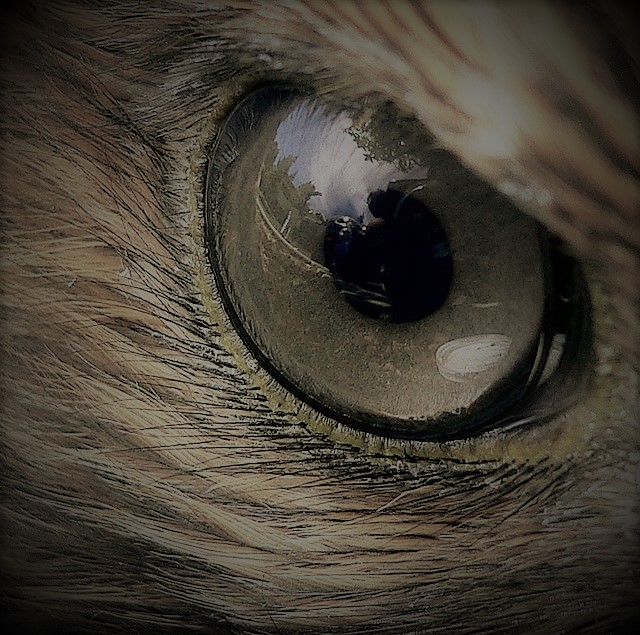
“He saw a terrible, appalling thing. It flew at him and hovered before his face. For a second they looked into each other’s eyes and then it was gone.”
Where did it go? She wants to know. She wants to know it but she’s not going to ask.
“I came about from nightmares, from the fears of ancient people, who understood nothing but retribution. They captured me and they worshipped me, thinking it would placate me. But I was captive all the same. They moved me from cage to cage over the years. They knew that I could inhabit any one of them and once that happened, I would pass from one to the other, use them up, keep moving on. They stopped my progress. They locked me up and they kept me in the dark.
“As you can imagine, I was rather angry.”
She nods. Mute.
“I wasn’t a thinking thing, a feeling thing. I simply existed. I didn’t even know that I existed! I was animal.
And I was an infection.”
She can remember running, so fast among the trees that it couldn’t catch her. She can remember her heart beating with terror and she can remember the smell of it. She had sensed the enormity of her crime that day, the massed accusations of the birds milling around her.
“The host might last four or five years at the most, Doug only three. And so I left him for a girl, an actress in his last film. I left him behind and moved on to her. Three years later, I was finished with her, had consumed her, and she, too, was abandoned.”
“Her name?” she asks quietly. “What was her name?”
“I was called Clare. Clare Hesketh.”
“She had an overdose.”
“That’s wrong. I didn’t have an overdose.”
He pauses and, for a second, she thinks she can see Clare among the eyes set deep in his sockets, sinking away. A beautiful girl, very ambitious. Only made a couple of decent films. Forgotten by everyone but her.
“After that an older man, Jeremy Lane.”
She cries out. How many jobs had she found for Jeremy Lane! How deeply she had felt for his confused wife who had found him so aggressive in his final years. Nina had been convinced that he’d had a brain tumour, he’d been so different to the man she married. And then his sudden passing. Worn out. He looked awful, like he’d been fighting for years.
“There were many more. I went from film set to film set. I don’t know why. Because that was the world I now inhabited. I used one up and then I’d move to the next. And then this strange, sorry little man was hanging around a set and I leapt to him. A journalist. He brought me back to you.”
“I’m not ready,” she cries. “Tomorrow they’re giving me an award. It’s for a lifetime of work. Great work.”
“There won’t be a tomorrow for either of us.”
She doesn’t understand, tries to wriggle free of his gaze, but it isn’t possible. He holds her.
“Something changed in me as I went from host to host. All those years caged and alone I hated you all. I wanted you to suffer. And so I tormented you, lived inside you while you suffocated and struggled and eventually gave up. But as time went on, the animal in me receded, and something like consciousness arrived. I started to understand. I started to think. I didn’t want to feed any more. I was more than that. I am more than what I was. I had to tell someone. I had to… I suppose I had to confess.”
“Why confess to me?” she sobs. “I don’t want to be the end of the chain. I never meant for this to happen. I thought I was doing something good in letting you free.”
“You are doing something good,” he says and smiles, closing his eyes.
The journalist falls to the ground and Joyce falls back against her settee, tries to get away but a terrible, awful, face arrives suddenly from nowhere in front of her. It appalls her. Its eyes are huge. It’s mouth a beak. It’s nostrils wide. There are scales. And there is an unbearable smell of sweat and blood. It all happens for a second and then it is gone.
And so is she.
 Bibi Berki